ABOUT THE GRANT
Krabbe disease is a devastating inherited disorder caused by mutations in the GALC gene, leading to the accumulation of the
toxic metabolite psychosine, which damages both the central and peripheral nervous systems (CNS and PNS). Current gene
therapy approaches using adeno-associated viral (AAV) vectors face significant challenges, including poor blood-brain barrier
(BBB) penetration, limited nervous system coverage, and high therapeutic doses, which increase risks and costs. This project seeks
to address these limitations by engineering advanced AAV vectors capable of efficient and specific transduction of CNS and PNS cells.
Leveraging my established receptor-guided selection pipeline and human BBB-crossing AAVs, I will further develop AAVs targeting
highly expressed cell surface receptors across nervous systems. These vectors will be optimized for comprehensive CNS and PNS
transduction. Their ability to deliver the GALC gene will be evaluated in healthy mice and Krabbe disease model mice. Collaboration
with experts will ensure reliable measurement of psychosine, a key biomarker for Krabbe disease.
The findings from this proposal have the potential to assess whether comprehensive GALC distribution reduces psychosine levels,
mitigates inflammation, and enhances overall therapeutic efficacy of Krabbe disease.
ABOUT CHANGFAN LIN
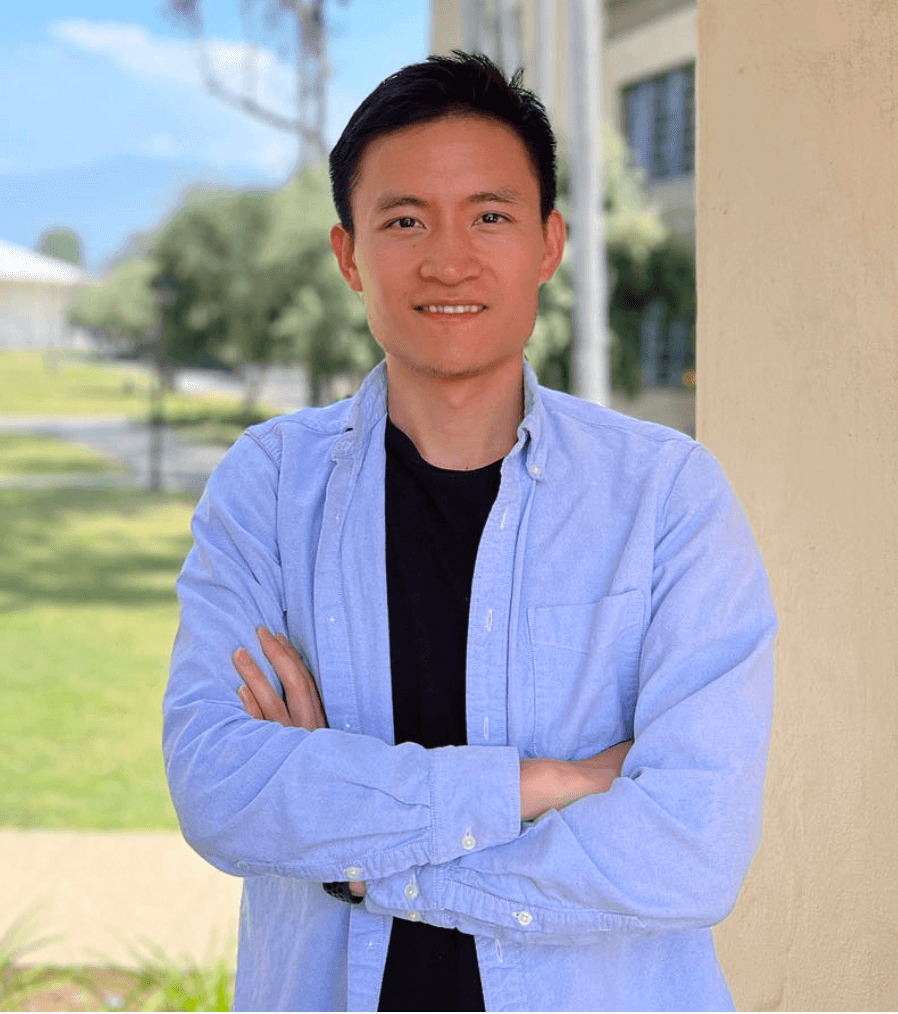
Changfan Lin, PhD is a postdoctoral researcher in the Gradinaru Lab at the California Institute of Technology (Caltech), specializing in protein engineering, structural biology, and gene therapy. His research focuses on engineering Adeno-Associated Virus (AAV) vectors to cross the blood-brain barrier (BBB), addressing critical challenges in treating neurodegenerative disorders such as Parkinson’s disease, Friedreich’s Ataxia, and Krabbe disease.
As a Friedreich’s Ataxia Research Alliance (FARA) Postdoctoral Fellow (2023, 2025), Dr. Lin has developed novel AAV variants targeting human carbonic anhydrase IV (CA4). This mechanism-informed approach—which identified variants like AAV-hCA4-IV77—achieves up to 250-fold enhanced CNS transgene expression in humanized mouse models. With funding from the Rosenau Family Research Foundation (RFRF), he is currently expanding this platform to treat Krabbe disease. By introducing dual modifications to BBB-crossing AAVs, his work enables the efficient, noninvasive transduction of diverse cell types—including neurons, astrocytes, and Schwann cells—aiming to reduce psychosine accumulation and mitigate inflammation.
Dr. Lin earned his B.S. in Biological Sciences from Tsinghua University and his PhD in Chemistry and Chemical Biology from Cornell University. In the Crane Lab at Cornell, he conducted pioneering research on the molecular underpinnings of circadian rhythms in Drosophila, utilizing techniques such as cryo-EM and XL-MS to elucidate light-dependent interactions within the Cryptochrome-Timeless complex. His work has been published in high-impact journals including Nature, PNAS, and Structure, and he continues to lead initiatives to optimize AAV capsids for clinical translation.