ABOUT THE GRANT
Cystic fibrosis is caused by dysfunctional mutations in CFTR, a critical chloride channel expressed in the airway.
In the absence of CFTR activity, mucus is thick and sticky, mucocilliary clearance is impaired, and the innate antimicrobial
activities of mucus are defective. Recently, highly effective modulator therapies (HEMTs) that partially correct CFTR
function have been introduced. While these therapies have had a marked impact, there is motivation to identify new
strategies to rescue mucus function because: 1) about 8% of CF patients have class I dysfunctional mutations,
which are not treatable with HEMTs; 2) for other patients where HEMTs are appropriate, variable efficacy is observed;
and 3) the long-term effectiveness of HEMTs is unknown. An alternative strategy is to target another chloride
channel in the airway that could compensate for reduced CFTR activity. Such an approach should be appropriate
for all CF patients. In this regard, we have shown that the calcium-activated chloride channel TMEM16A can serve this
function. We have identified and engineered a protein that can specifically potentiate TMEM16A called CLCA1 VWA, and
we have shown that this approach rescues mucus function in CF airway models. We have also found that a unique form
of TMEM16A, which may have increased activity, is expressed in CF airways. The purpose of this project is to investigate
the activation properties of this form of TMEM16A, and characterize the cells and pathways that mediate its function.
The results could lead to new therapeutic approaches to treat CF or improve current HEMT regimens as add-on therapy,
and should be effective for the subset of CF patients for which there are no current effective corrector therapies.
ABOUT JEFFREY MILLMAN
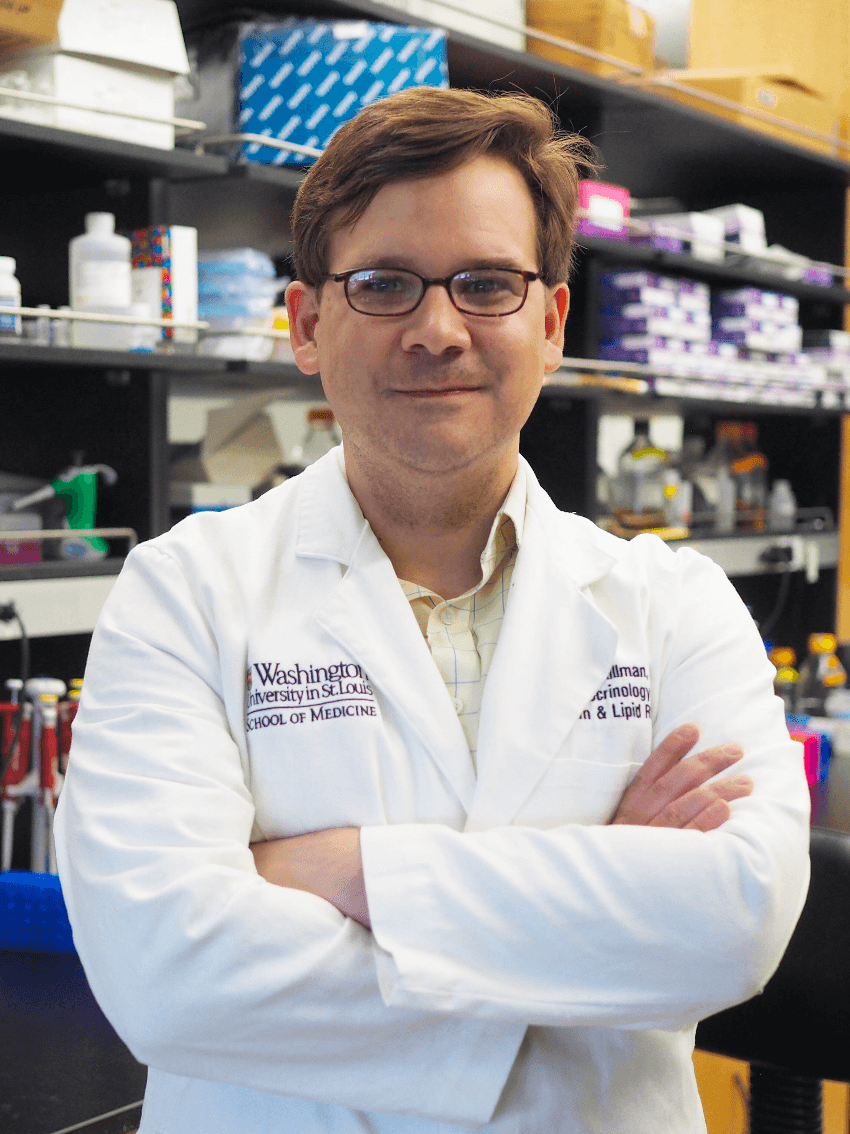
Jeffrey R. Millman, PhD., is the Alan A. and Edith L. Wolff Professor of Endocrinology and a Professor of Medicine in the Division of Endocrinology, Metabolism, and Lipid Research at Washington University School of Medicine in St. Louis, with additional appointments in the Department of Biomedical Engineering, the Diabetes Research Center, the Center for Regenerative Medicine. He is an internationally recognized leader in stem cell biology, regenerative medicine, and diabetes research.
Dr. Millman’s laboratory develops stem cell-derived islet therapies aimed at providing a functional cure for diabetes of all forms. His research integrates stem cell engineering, genome editing, biomaterials, and single-cell multi-omics to generate clinically relevant pancreatic islet cells, understand disease mechanisms, and advance next-generation cell replacement therapies. His group also develops stem cell models of diabetes and other endocrine disorders to accelerate therapeutic discovery and improve our understanding of human disease.
Prior to joining Washington University in 2015, Dr. Millman earned his Ph.D. in Chemical Engineering from the Massachusetts Institute of Technology and completed postdoctoral training in the laboratory of Douglas Melton at Harvard University, where he contributed to pioneering advances in the generation of functional human stem cell-derived β cells.
Dr. Millman’s research has helped establish the modern framework for producing and maturing stem cell-derived pancreatic β cells and has contributed to advances in diabetes disease modeling, manufacturing, and transplantation. His work has been supported by the National Institutes of Health and Breakthrough T1D (formerly JDRF).
In addition to his research program, Dr. Millman is committed to mentoring the next generation of scientists. He has trained more than 40 graduate students, postdoctoral fellows, and research staff who have gone on to leadership positions in academia and biotechnology. He also serves in national scientific leadership roles, including on NIH study sections and collaborative research initiatives focused on advancing regenerative medicine and diabetes therapies.
Through his research and collaborative leadership, Dr. Millman seeks to translate fundamental discoveries into transformative therapies that improve the lives of individuals living with diabetes and other chronic diseases.